
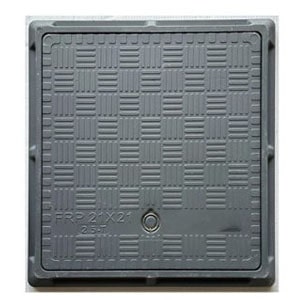
FRP (Fiberglass Reinforced Plastic/Polymer) manholes are lightweight, corrosion-resistant alternatives to traditional concrete, steel, or brick manholes. They are widely used in wastewater treatment, chemical plants, marine environments, and corrosive soil conditions due to their durability and long service life.
Key Features of FRP Manholes
✅ Corrosion Resistance – Resistant to acids, alkalis, seawater, and harsh chemicals.
✅ Lightweight – Easy to transport and install (up to 75% lighter than concrete).
✅ High Strength-to-Weight Ratio – Stronger than concrete in many applications.
✅ Long Lifespan – 50+ years with minimal maintenance.
✅ Watertight & Leakproof – No cracks or seepage issues.
✅ Customizable – Available in different sizes, shapes, and entry configurations.
Applications of FRP Manholes
-
Municipal & Industrial Wastewater Systems
-
Chemical & Petrochemical Plants
-
Marine & Offshore Installations
-
Power Plants & Desalination Facilities
-
Mining & Heavy Industry
-
Telecom & Electrical Utility Access
Comparison: FRP vs. Traditional Manholes
| Feature | FRP Manholes | Concrete Manholes | Steel Manholes |
|---|---|---|---|
| Weight | Lightweight | Very Heavy | Heavy |
| Corrosion Resistance | Excellent | Poor (cracks, spalling) | Prone to rust |
| Installation Time | Fast (modular) | Slow (curing needed) | Moderate |
| Lifespan | 50+ years | 20-30 years | 15-25 years |
| Chemical Resistance | High | Low (degrades in acids) | Moderate |
| Maintenance | Minimal | Frequent repairs | High (rust prevention) |
Types of FRP Manholes
-
Standard FRP Manholes – Used in municipal sewage and stormwater systems.
-
Chemical-Resistant FRP Manholes – For industrial effluents (acid/alkali resistance).
-
Underground FRP Chambers – For telecom and electrical access.
-
FRP Grease Traps & Interceptors – For restaurants and food processing plants.
-
Custom-Designed FRP Manholes – Made-to-order for unique project needs.
Installation & Maintenance
-
Modular Design: Often comes in sections for easy assembly.
-
No Heavy Machinery Needed: Can be installed manually in tight spaces.
-
Minimal Upkeep: Unlike concrete, FRP doesn’t crack or corrode.
Leading FRP Manhole Manufacturers
-
Containment Solutions, Inc. (CSI)
-
Lancaster Composite
-
FRP Services & Company
-
ZCL Composites
-
Belco Manufacturing
Conclusion
FRP manholes are the best choice for corrosive, high-moisture, and industrial environments where traditional materials fail. They offer lower lifetime costs, faster installation, and superior durability compared to concrete or steel.
Would you like help with:
-
Supplier recommendations?
-
Technical specifications?
-
Cost comparisons?