8124077777


How FRP Battery Racks Improve Safety and Durability in Battery Rooms?

Battery rooms play a critical role in industries such as power generation, telecom, data centers, railways, and renewable energy. However, they also pose unique safety challenges. From acid leaks and hydrogen gas emissions to electrical hazards, battery rooms demand infrastructure that’s both safe and durable. This is where FRP Battery Racks come into the picture.

Why Battery Storage Infrastructure Matters

Battery systems are capital-intensive and mission-critical. A minor failure in storage infrastructure can lead to costly downtime, safety incidents, or even regulatory penalties. Traditional materials like steel may look strong, but they often fail in corrosive and electrically sensitive environments. As a result, facility managers are shifting toward advanced composite solutions.

Common Risks in Traditional Battery Racks

Conventional metal racks are prone to corrosion, electrical conductivity, and chemical degradation. Over time, this leads to rust, reduced load-bearing capacity, and increased maintenance. Worse still, metal conducts electricity, increasing the risk of short circuits. These challenges have pushed industries to seek safer alternatives that don’t compromise durability.

What Are FRP Battery Racks?

FRP Battery Racks are basic capacity frameworks made from Fiber Strengthened Plastic, a composite fabric known for its quality, separator, and erosion resistance. They’re particularly planned to bolster mechanical batteries in controlled and cruel situations alike.

Definition and Composition of FRP

FRP combines high-strength strands such as glass filaments with polymer gums like polyester or vinyl ester. This combination comes about in a lightweight however fantastically solid fabric. Not at all like metals, FRP doesn’t erode, rust, or conduct electricity—making it perfect for battery rooms.

Manufacturing Handle Overview

The most common fabricating strategies incorporate pultrusion and molding. Pultrusion guarantees reliable cross-sections and predominant quality, which is basic for rack solidness. Quality-controlled generation guarantees each rack meets stack and security specifications.

Types of FRP Battery Racks

Single-tier FRP battery racks

Multi-tier FRP battery racks

Custom-designed rack for telecom and UPS systems

Each type is engineered to accommodate different battery sizes, weights, and ventilation requirements.

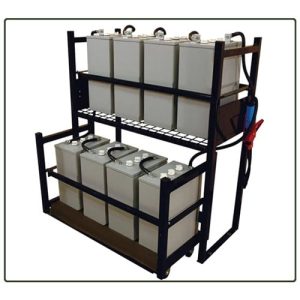
FRP Battery

Safety Benefits of FRP Battery Racks

When it comes to safety, FRP Battery Racks clearly outperform traditional alternatives. Their intrinsic material properties reduce multiple risk factors in battery rooms.

Electrical Insulation Properties

FRP is a non-conductive material. This significantly lowers the risk of electrical shock, short circuits, and accidental grounding. In high-voltage battery rooms, this insulation property isn’t just helpful—it’s essential.

Fire Resistance and Flame Retardancy

Modern FRP racks are manufactured using fire-retardant resins. These resins slow flame spread and reduce smoke emission. In the event of a thermal runaway, FRP racks help contain damage rather than amplify it.

Chemical and Acid Resistance

Battery rooms regularly bargain with sulfuric corrosive exhaust and electrolyte spills. FRP stands up to chemical assault, keeping up auxiliary astuteness indeed after drawn out presentation. Concurring to mechanical security rules distributed by OSHA, acid-resistant materials are suggested in battery capacity regions (see OSHA Battery Room Security Rules).

Durability and Long-Term Performance

Durability is another area where FRP Battery Racks shine. While metal deteriorates over time, FRP maintains its performance for decades.

Corrosion Resistance in Harsh Environments

Humidity, acid vapors, and temperature fluctuations can destroy steel racks. FRP, however, remains unaffected. This corrosion resistance ensures stable performance in coastal areas, chemical plants, and industrial zones.

Load-Bearing Capacity and Structural Strength

Despite being lightweight, FRP racks offer impressive load-bearing capabilities. Advanced fiber orientation and resin systems allow them to support heavy battery loads without deformation.

Low Maintenance and Lifecycle Cost

Because FRP doesn’t rust or corrode, maintenance requirements are minimal. There’s no need for repainting or anti-corrosion treatments. Over time, this translates into significant cost savings and a lower total cost of ownership.

Standards, Compliance, and Applications

Adopting FRP Battery Racks isn’t just a smart decision—it’s often a compliant one. Many industries now prefer FRP solutions to meet modern safety standards.

Compliance with Industry Safety Standards

FRP racks are designed to comply with IEC, IEEE, and local electrical safety standards. Their non-conductive and chemical-resistant properties align well with regulatory requirements.

Applications Across Industries

  • Telecom and data centers

  • Power plants and substations

  • Railways and metro systems

  • Solar and renewable energy plants

Their versatility makes them suitable for both indoor and outdoor installations.

Environmental and Sustainability Advantages

FRP has a long service life and requires fewer replacements. This reduces material waste and environmental impact. Many FRP systems are also recyclable, supporting sustainability goals.

Conclusion

In today’s safety-conscious and performance-driven industrial landscape, FRP Battery Rack have emerged as a reliable, future-ready solution. They address critical issues like corrosion, electrical safety, and durability more effectively than traditional materials. With proven advantages in safety, longevity, and cost efficiency, FRP racks are no longer an alternative—they’re the standard for modern battery rooms.

Frequently Asked Questions (FAQs)

1. Why are FRP Battery Racks safer than steel racks?

Because they’re non-conductive, corrosion-resistant, and acid-proof, reducing electrical and chemical risks.

2. Can FRP Battery Racks handle heavy industrial batteries?

Yes, they’re engineered for high load-bearing capacity and structural stability.

3. Are FRP Battery Racks suitable for outdoor use?

Absolutely. They resist UV radiation, moisture, and temperature extremes.

4. How long do FRP Battery Racks last?

With minimal maintenance, they can last 20–30 years or more.

5. Do FRP racks comply with safety standards?

Yes, most are designed to meet IEC, IEEE, and OSHA-related safety guidelines.

6. Are FRP Battery Racks environmentally friendly?

They offer long lifespans and reduced maintenance, lowering overall environmental impact.

polyearth

Solar Walkways: Smart Paths Powered by Clean Energy

Solar Walkways

As industries and infrastructure projects move toward sustainable and energy-efficient solutions, Solar Walkways are emerging as an innovative combination of safety, durability, and renewable energy. At Polyearth, we design and manufacture advanced Solar Walkway solutions that integrate the strength of FRP with the power of solar technology.


What Are Solar Walkways?

Solar Walkways are specially engineered walkways that incorporate solar panels into FRP (Fiber Reinforced Plastic) walkway systems. These walkways not only provide safe and durable access paths but also generate clean, renewable energy—making optimal use of available space.


Why Choose FRP-Based Solar Walkways?

FRP is an ideal material for Solar Walkways due to its unique properties:

  • High strength with lightweight design

  • Excellent corrosion and weather resistance

  • Non-conductive and safe for electrical environments

  • Low maintenance and long service life

When combined with solar panels, FRP walkways offer both structural reliability and energy efficiency.


Key Benefits of Solar Walkways

  • Dual Functionality: Safe pedestrian access and solar power generation

  • Energy Cost Reduction: On-site renewable energy lowers electricity expenses

  • Enhanced Safety: Anti-slip FRP surfaces ensure safe movement

  • Space Optimization: Utilizes existing walkways for power generation

  • Eco-Friendly Solution: Supports sustainability and carbon reduction goals


Applications of Solar Walkways

Solar Walkways from Polyearth are suitable for a wide range of environments, including:

  • Industrial plants and factories

  • Power plants and substations

  • Warehouses and logistics centers

  • Commercial complexes

  • Infrastructure and utility projects

They are especially effective in areas with high sunlight exposure and frequent foot traffic.


Polyearth’s Expertise in Solar Walkways

At Polyearth, we deliver end-to-end Solar Walkway solutions, including:

  • Custom FRP walkway design

  • Integration of solar panels with FRP structures

  • Anti-slip, load-bearing walkway systems

  • Installation-ready modular designs

Our solutions are engineered for safety, performance, and long-term reliability under harsh outdoor conditions.


Supporting Sustainable Infrastructure

Solar Walkways reflect Polyearth’s commitment to sustainable innovation. By combining durable FRP materials with renewable energy technology, we help industries reduce their environmental footprint while maintaining operational efficiency.


Conclusion

Solar Walkways represent the future of smart, sustainable infrastructure. With Polyearth’s FRP-based Solar Walkway solutions, organizations can enhance safety, generate clean energy, and move closer to their sustainability goals.

Polyearth – Walking the Path to a Sustainable Future.

polyearth

Trusted FRP Manufacturing Solutions

Trusted FRP Manufacturing Solutions

In an era where industries demand strength, reliability, and long-term value, FRP (Fiber Reinforced Plastic) manufacturing solutions have become a preferred choice across sectors. At Polyearth, trust is built through quality, precision, and consistent performance. Our FRP manufacturing solutions are designed to meet the highest industrial standards while addressing real-world challenges.


Excellence in FRP Manufacturing

FRP manufacturing is a specialized process that requires technical expertise, quality raw materials, and strict quality control. Polyearth follows advanced manufacturing practices to ensure every product delivers:

  • High structural strength

  • Superior corrosion and chemical resistance

  • Dimensional accuracy and consistency

  • Long service life with minimal maintenance

Each product is manufactured with attention to detail, ensuring reliability in even the most demanding environments.


End-to-End FRP Solutions

Polyearth offers complete FRP manufacturing solutions, from design and engineering to fabrication and delivery. Our capabilities include:

  • Custom FRP product design

  • Molded and pultruded FRP components

  • Industry-specific FRP solutions

  • Prototype development and bulk production

This end-to-end approach allows us to deliver tailored solutions that align perfectly with customer requirements.


Industries We Serve

Construction & Infrastructure

Our FRP products are widely used in infrastructure projects for their lightweight strength and durability. Applications include gratings, handrails, cable trays, and structural components.

Chemical & Process Industries

We manufacture FRP products that withstand corrosive chemicals, high temperatures, and harsh operating conditions, making them ideal for tanks, ducts, scrubbers, and pipelines.

Water & Wastewater Management

Polyearth’s FRP solutions support efficient water storage, treatment, and drainage systems, offering leak-proof, corrosion-free, and hygienic performance.

Electrical & Power Sector

Our electrically non-conductive and fire-retardant FRP products ensure safety and reliability in power plants, substations, and utility networks.

Industrial & Manufacturing Facilities

From walkways and platforms to customized industrial components, our FRP solutions improve safety, efficiency, and operational lifespan.


Why Polyearth is a Trusted FRP Manufacturer

Trust is earned through consistent quality and customer satisfaction. Polyearth stands out because of:

  • Use of high-quality fibers and resin systems

  • Compliance with industry standards and safety norms

  • Skilled manufacturing and engineering teams

  • Commitment to timely delivery and technical support

Our focus is not just on manufacturing FRP products, but on building long-term partnerships with our clients.


Commitment to Quality & Sustainability

Polyearth integrates quality assurance at every stage of production. In addition, FRP products contribute to sustainability by reducing maintenance needs, minimizing material waste, and extending service life compared to traditional materials.


Conclusion

When industries need dependable, high-performance materials, trusted FRP manufacturing solutions make the difference. With Polyearth, customers gain a reliable partner dedicated to strength, innovation, and lasting value.

Polyearth – Your Trusted Partner in FRP Manufacturing Solutions.

polyearth

Long-Lasting FRP Products for Every Industry

Long-Lasting FRP Products for Every Industry

In today’s fast-evolving industrial landscape, durability, efficiency, and sustainability are no longer optional—they are essential. This is where FRP (Fiber Reinforced Plastic) products stand out as a reliable solution across industries. At Polyearth, we specialize in delivering long-lasting FRP products engineered to meet the diverse needs of modern industries.


What Makes FRP Products Long-Lasting?

FRP products are manufactured by combining high-strength fibers with advanced resin systems. This unique composition offers several long-term advantages:

  • High strength-to-weight ratio

  • Excellent corrosion and chemical resistance

  • Low maintenance requirements

  • Superior weather and UV resistance

  • Long service life even in harsh environments

Unlike traditional materials such as steel or wood, FRP does not rust, rot, or corrode, making it a cost-effective investment over time.


FRP Solutions for Every Industry

1. Construction & Infrastructure

FRP products are widely used in construction due to their lightweight nature and structural strength. Applications include:

  • FRP gratings and handrails

  • Roofing sheets and panels

  • Cable trays and ladders

These products offer long life, safety, and easy installation, even in demanding environments.

2. Chemical & Process Industries

Chemical plants require materials that can withstand aggressive substances. Polyearth’s FRP products provide:

  • High chemical resistance

  • Leak-proof and corrosion-free performance

  • Safe handling of acids, alkalis, and solvents

This makes FRP ideal for tanks, pipes, scrubbers, and ducting systems.

3. Water & Wastewater Management

FRP is a preferred material for water-related applications due to its non-reactive and hygienic properties. Common uses include:

  • FRP water storage tanks

  • Sewage and effluent treatment components

  • Manhole covers and channels

Our FRP solutions ensure durability and consistent performance with minimal maintenance.

4. Electrical & Utility Sector

Electrical safety demands non-conductive and flame-resistant materials. FRP products meet these requirements by offering:

  • Excellent electrical insulation

  • Fire-retardant properties

  • Resistance to moisture and heat

FRP cable trays, enclosures, and panels are widely trusted in power and utility projects.

5. Industrial & Manufacturing Units

From factories to warehouses, FRP products enhance safety and efficiency:

  • Anti-slip FRP gratings

  • Industrial platforms and walkways

  • Custom-molded FRP components

These products are designed to handle heavy loads while maintaining long-term reliability.


Why Choose Polyearth FRP Products?

At Polyearth, quality and innovation drive everything we do. Our FRP products are:

  • Manufactured using premium-grade raw materials

  • Designed for custom industrial requirements

  • Tested for strength, durability, and safety

  • Backed by technical expertise and industry experience

We focus on delivering solutions that not only meet standards but exceed customer expectations.


A Sustainable Choice for the Future

FRP products are not just durable—they are also environmentally responsible. Their long lifespan, low maintenance, and reduced need for replacements help minimize resource consumption and overall environmental impact.


Conclusion

From construction and chemicals to water management and electrical systems, FRP products have become the backbone of modern industry. With Polyearth’s long-lasting FRP solutions, industries can achieve higher performance, lower maintenance costs, and long-term reliability.

Polyearth – Building Strength That Lasts.

polyearth

Innovative FRP Products for Industrial & Commercial Use

Innovative FRP Products for Industrial & Commercial Use

Fiber Reinforced Plastic (FRP) products have become an essential part of modern industrial and commercial infrastructure. Known for their exceptional strength, corrosion resistance, and lightweight properties, FRP products are transforming the way industries design, build, and maintain their facilities. As technology advances, innovative FRP solutions continue to replace traditional materials like steel, wood, and concrete across multiple applications.

What Makes FRP Products Innovative?

FRP products are manufactured by combining high-strength fibers such as glass or carbon with durable polymer resins. This combination results in materials that offer superior performance while reducing overall weight and maintenance costs. Recent innovations in FRP manufacturing have improved load-bearing capacity, fire resistance, UV protection, and design flexibility, making them ideal for both industrial and commercial use.

Key Benefits of FRP Products

One of the biggest advantages of FRP products is their corrosion resistance. Unlike metal, FRP does not rust or corrode, even in harsh environments involving chemicals, moisture, or extreme weather conditions. This makes FRP an excellent choice for chemical plants, wastewater treatment facilities, and coastal installations.

FRP products are also lightweight yet strong, allowing easy transportation, faster installation, and reduced structural load. Their non-conductive and fire-retardant properties further enhance safety in industrial and commercial environments.

Additionally, FRP products require minimal maintenance, offering long-term cost savings compared to conventional materials.

Industrial Applications of FRP Products

In industrial settings, FRP products are widely used for:

  • Chemical storage tanks and pipelines

  • Industrial gratings, platforms, and walkways

  • Cooling towers and scrubbers

  • Cable trays and ladder systems

  • Industrial roofing and cladding

FRP’s resistance to chemicals and high temperatures makes it a preferred material for industries such as oil & gas, pharmaceuticals, power plants, and manufacturing units.

Commercial Applications of FRP Products

Commercial spaces benefit from FRP products due to their aesthetic appeal and durability. Common applications include:

  • Architectural panels and facades

  • Roofing sheets and skylights

  • FRP doors, partitions, and enclosures

  • Decorative elements and false ceilings

  • Parking structures and public utility installations

FRP products can be customized in various colors, textures, and finishes, allowing architects and designers to combine functionality with modern aesthetics.

Sustainability and Environmental Benefits

Innovative FRP products contribute to sustainable construction practices. Their long lifespan, reduced maintenance needs, and resistance to environmental damage help minimize material replacement and waste. Many FRP manufacturers are also adopting eco-friendly resins and recycling practices to reduce environmental impact.

Future of FRP in Industrial & Commercial Sectors

As industries demand smarter, safer, and more cost-effective materials, FRP products are set to play an even bigger role. Advancements in resin technology, automation, and design customization are driving the next generation of FRP solutions. From smart infrastructure to green buildings, FRP continues to redefine material performance standards.

Conclusion

Innovative FRP products offer unmatched advantages for industrial and commercial use, combining strength, durability, safety, and design flexibility. As a modern alternative to traditional materials, FRP is not just a choice—it is a long-term investment in efficiency, reliability, and sustainability.

Everything You Need to Know About FRP Ladders for Industrial Use

Everything you need to know about FRP ladders for industrial use begins with understanding why industries worldwide are switching to FRP solutions. FRP ladder, short for Fiber Reinforced Plastic ladders, are designed to withstand harsh industrial conditions while ensuring maximum worker safety.

Industries such as chemical plants, power stations, refineries, and manufacturing units demand ladders that don’t corrode, conduct electricity, or degrade easily. That’s where FRP ladder truly shine. They’re not just an alternative anymore; they’re becoming the standard.

What Is FRP? Understanding the Material

FRP stands for Fiber Reinforced Plastic, a composite material made of polymer resin reinforced with fibers such as glass. This combination provides outstanding mechanical strength, durability, and resistance.

What sets FRP apart is its adaptability. Manufacturers can tailor FRP ladders for load capacity, height, anti-slip features, and chemical resistance. As a result, everything you need to know about FRP ladders for industrial use ties back to the versatility of the material itself.

Why FRP Ladders Matter in Industrial Environments

Industrial environments are unforgiving. There’s moisture, chemicals, electrical hazards, and constant wear and tear. Traditional ladders often fail early under these conditions.

FRP ladders matter because they:

  • Don’t rust or corrode

  • Offer electrical insulation

  • Maintain structural integrity over decades

In short, they reduce accidents, downtime, and replacement costs.

Key Benefits of FRP Ladder

Corrosion Resistance

Unlike steel or aluminum, FRP ladder don’t corrode. They’re ideal for chemical plants, coastal areas, and wastewater facilities.

Electrical Insulation

FRP ladders are non-conductive, making them essential for electrical and power-related industries.

High Strength-to-Weight Ratio

FRP ladders are lightweight yet incredibly strong, improving portability without compromising safety.

[caption id="attachment_1550" align="alignnone" width="300"]FRP ladders FRP ladders[/caption]

Types of FRP Ladder

Step Ladder

Perfect for maintenance and inspection tasks indoors and outdoors.

Extension Ladder

Used when adjustable height access is required in industrial settings.

 Fixed FRP Ladder

Installed permanently in plants, tanks, silos, and towers.

FRP Ladders vs Traditional Metal Ladder

Feature FRP Ladders Metal Ladders
Corrosion Resistant Prone to rust
Electrical Safety Non-conductive Conductive
Maintenance Minimal Frequent
Lifespan 20+ years 5–10 years

Everything you need to know about FRP ladder for industrial use becomes clear when compared side by side with metal ladders.

Common Industrial Applications of FRP Ladder

FRP ladder are used in:

  • Chemical processing plants

  • Oil & gas refineries

  • Power plants

  • Water treatment facilities

  • Pharmaceutical units

  • Design and Construction of FRP Ladder

    FRP ladder are manufactured using pultrusion technology. This ensures uniform fiber distribution and consistent quality. Anti-slip rungs, UV resistance, and flame retardant resins can be incorporated based on need.

  • Installation Guidelines

    Proper installation is critical:

    • Ensure level ground or secure anchoring

    • Follow manufacturer load limits

    • Use safety cages for fixed ladders at height

    When installed correctly, FRP ladder perform reliably for decades.

  • Maintenance and Longevity

    FRP ladder require minimal maintenance:

    • Occasional cleaning

    • Visual inspection for cracks

    There’s no painting, coating, or rust removal. That’s a big win for industrial operators.

  • Cost Considerations and ROI

    While FRP ladder may have a higher upfront cost, the long-term ROI is excellent. Lower maintenance, longer lifespan, and fewer accidents significantly reduce total cost of ownership.

  • Environmental and Sustainability Aspects

    FRP ladders support sustainability by:

    • Reducing frequent replacements

    • Lowering maintenance chemical usage

    • Offering long service life

    Everything you need to know about FRP ladders for industrial use also includes their environmental advantage.

  • Choosing the Right FRP Ladder

    When selecting an FRP ladder, consider:

    • Load capacity

    • Height requirements

    • Environmental exposure

    • Compliance standards

    Working with a reputable manufacturer ensures safety and performance.

  • Conclusion

    Everything you need to know about FRP ladder for industrial use points to one clear conclusion: they’re safer, stronger, and smarter than traditional ladders. With superior corrosion resistance, electrical insulation, and long-term value, FRP ladder are an investment in safety and efficiency.

  • FAQs

    1. Are FRP ladder safe for electrical work?

    Yes, FRP ladders are non-conductive and ideal for electrical environments.

    2. How long do FRP ladder last?

    Typically 20–25 years with minimal maintenance.

    3. Can FRP ladder be used outdoors?

    Absolutely. They’re UV and weather resistant.

    4. Are FRP ladder heavier than aluminum?

    No, they’re lightweight yet stronger.

    5. Do FRP ladder require painting?

    No painting or coating is needed.

    6. Are FRP ladder cost-effective?

    Yes, due to lower lifecycle costs.

FRP Rebar

What Is FRP Rebar and Why Is It Better Than Steel?

What is FRP rebar, and why is it better than steel? This question is becoming more common as the construction industry shifts toward durable, sustainable, and cost-effective materials. FRP also known as Fiber Reinforced Polymer rebar, is rapidly gaining popularity as a modern alternative to traditional steel reinforcement.

Traditionally, steel rebar has been the backbone of reinforced concrete structures. However, steel has one major weakness—it corrodes. Over time, corrosion reduces structural integrity, increases maintenance costs, and shortens the lifespan of buildings and infrastructure. This is where FRP steps in as a game-changer.

FRP doesn’t rust, doesn’t corrode, and offers impressive strength-to-weight performance. In this guide, we’ll break down what FRP is, how it works, and why it’s often a better choice than steel—especially for aggressive environments.

Understanding the Basics of FRP Rebar

What Does FRP Stand For?

FRP stands for Fiber Reinforced Polymer. It’s a composite material made by embedding strong fibers into a polymer resin matrix. These fibers provide strength, while the resin binds everything together and protects the fibers from environmental damage.

When used as rebar, FRP replaces steel bars in concrete structures, offering reinforcement without the drawbacks of corrosion and heavy weight.

Key Materials Used in FRP Rebar

FRP rebar typically uses:

Glass fibers (GFRP) – most common and cost-effective

Carbon fibers (CFRP) – extremely strong but expensive

Basalt fibers (BFRP) – good balance between strength and cost

The resin matrix is usually polyester, vinyl ester, or epoxy, chosen based on performance requirements.

How FRP Rebar Is Manufactured

Pultrusion Process Explained

FRP is produced using a process called pultrusion. In simple terms, fibers are pulled through a resin bath and then shaped and cured in a heated die. This creates a consistent, high-strength rebar profile.

Surface treatments, such as sand coating or helical wraps, are added to improve bonding with concrete.

Quality Standards and Certifications

FRP is manufactured according to international standards like:

ACI 440

ASTM D7957

CSA S807

These standards ensure consistent quality, strength, and safety in construction applications.

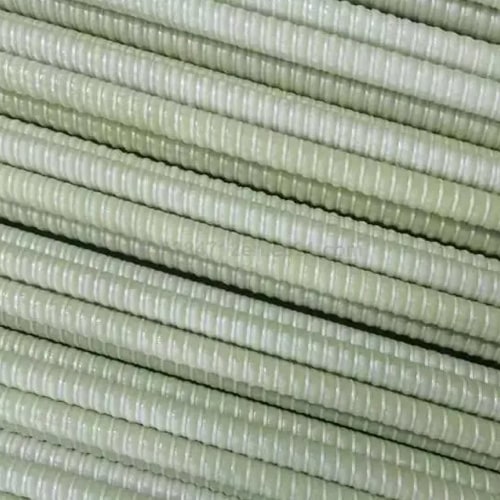
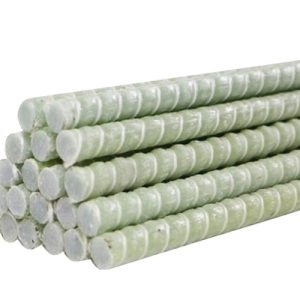
FRP Rebar

What Is Steel Rebar? A Quick Overview

Steel rebar is made from carbon steel and has been used for decades in reinforced concrete. It offers good tensile strength and compatibility with concrete but suffers from corrosion when exposed to moisture, salts, or chemicals.

FRP Rebar vs Steel Rebar: Core Differences

Strength Comparison

FRP has 2–3 times higher tensile strength than steel. While steel yields before failure, FRP remains elastic until it reaches its ultimate strength.

Weight Comparison

FRP is about 75% lighter than steel, making transportation and handling much easier.

Corrosion Resistance

Unlike steel, FRP is 100% corrosion-resistant, even in harsh environments.

Property FRP Rebar Steel Rebar
Corrosion No Yes
Weight Very Light Heavy
Tensile Strength High Moderate
Maintenance Low High
Conductivity Non-conductive Conductive

11 Powerful Benefits of FRP Rebar

1. Corrosion-Free Performance

FRP rebar doesn’t rust. This alone makes it ideal for coastal, marine, and chemical environments.

2. High Tensile Strength

It can handle heavy loads without permanent deformation.

3. Lightweight Advantage

Workers can lift and install FRP rebar easily—no heavy machinery needed.

4. Longer Service Life

Structures reinforced with FRP rebar can last up to 100 years or more.

5. Low Maintenance Costs

No corrosion means fewer repairs and lower lifecycle expenses.

6. Non-Conductive and Non-Magnetic

Ideal for hospitals, power plants, and MRI rooms.

7. Thermal Compatibility

FRP rebar has low thermal conductivity, reducing thermal bridging.

8. Easy Transportation and Handling

Lower freight costs and faster installation save time and money.

9. Chemical Resistance

Resistant to acids, salts, and alkaline environments.

10. Environmentally Friendly Choice

Longer lifespan means less material consumption over time.

11. Better Lifecycle Cost

While initial costs may be higher, long-term savings are significant.

Applications of FRP Rebar in Construction

Marine and Coastal Structures

Used in seawalls, jetties, and ports due to excellent corrosion resistance.

Bridges and Flyovers

Ideal for decks and barriers exposed to de-icing salts.

Industrial and Chemical Plants

Resists aggressive chemicals that degrade steel.

Water Treatment Facilities

Perfect for tanks, pipes, and slabs exposed to moisture.

Residential and Commercial Buildings

Increasingly used in slabs, foundations, and parking structures.

Limitations of FRP Rebar

Although FRP offers many advantages, it has some limitations:

  • Higher initial cost than steel

  • Lower modulus of elasticity

  • Requires specialized design considerations

However, modern engineering practices easily address these challenges.

Cost Analysis: FRP Rebar vs Steel

FRP may cost more upfront, but when you factor in:

  • Zero corrosion

  • Minimal maintenance

  • Extended lifespan

Why FRP Rebar Is the Future of Construction

As infrastructure demands grow and sustainability becomes critical, FRP offers a reliable, long-lasting solution. Governments, engineers, and builders worldwide are adopting it for smarter, more resilient construction.

Simply put, FRP rebar aligns perfectly with modern construction goals—durability, efficiency, and sustainability.

Conclusion

So, what is FRP and why is it better than steel? The answer lies in its durability, corrosion resistance, and long-term value. While steel has served construction well for decades, FRP represents the next evolution in reinforcement technology.

Frequently Asked Questions (FAQs)

1. What is FRP rebar used for?

FRP is used to reinforce concrete in corrosive and demanding environments.

2. Is FRP rebar stronger than steel?

Yes, FRP rebar has higher tensile strength than steel.

3. Does FRP rebar rust?

No, FRP is completely corrosion-resistant.

4. Can FRP rebar replace steel completely?

In many applications, yes—especially where corrosion is a concern.

5. Is FRP rebar safe for construction?

Absolutely. It meets international safety and quality standards.

6. Is FRP rebar cost-effective?

Over the structure’s life, FRP is often more cost-effective than steel.

FRP Gratings

Top Benefits of FRP Gratings for Industrial Applications

The top benefits of FRP grating for industrial applications have made them an increasingly preferred choice across multiple industries. From chemical plants to wastewater treatment facilities, FRP gratings are replacing traditional steel and aluminum solutions. Why? Because industries today demand materials that are strong, safe, cost-effective, and resistant to harsh environments.

FRP gratings, also known as fiberglass reinforced plastic gratings, deliver consistent performance even in the most aggressive conditions. They don’t rust, they don’t conduct electricity, and they don’t demand constant maintenance. In short, they work hard so businesses don’t have to.

Moreover, industries are under pressure to improve worker safety and reduce downtime. FRP gratings contribute to both goals. With anti-slip surfaces and lightweight structures, they simplify installation while improving operational efficiency.

As we explore the top benefits of FRP gratings for industrial applications, you’ll see why they’re considered a long-term investment rather than just another construction material.

Understanding FRP Grating Materials

What Is Fiber Reinforced Plastic (FRP)?

Fiber Reinforced Plastic (FRP) is a composite material made from a polymer matrix reinforced with fiberglass. This combination results in a material that’s strong, lightweight, and highly resistant to environmental damage. Unlike metal, FRP doesn’t corrode when exposed to chemicals, saltwater, or moisture.

Types of FRP Gratings

FRP gratings are mainly classified into two categories:

  • Molded FRP Gratings: Ideal for heavy corrosion-prone environments

  • Pultruded FRP Gratings: Known for high load-bearing capacity

Both types contribute significantly to the top benefits of FRP grating for industrial applications, offering flexibility based on structural and environmental requirements.

Key Industrial Applications of FRP Gratings

FRP gratings are used across a wide range of industries, including:

  • Chemical processing plants

  • Oil & gas facilities

  • Power generation units

  • Water and wastewater treatment plants

  • Marine and offshore platforms

  • Food and beverage industries

Their versatility makes them suitable for walkways, platforms, stair treads, trench covers, and mezzanine floors. Wherever safety and durability matter, FRP gratings stand out.

FRP Gratings

Exceptional Corrosion Resistance

One of the top benefits of FRP grating for industrial applications is their unmatched corrosion resistance. Unlike steel gratings, FRP does not rust or degrade when exposed to acids, alkalis, or salts.

Industries dealing with harsh chemicals face frequent maintenance challenges. FRP eliminates many of those headaches. Even in coastal environments or chemical plants, FRP gratings maintain structural integrity for decades.

Because corrosion is minimized, operational downtime is significantly reduced. That means higher productivity and fewer unexpected repairs. It’s a win-win situation for facility managers.

High Strength-to-Weight Ratio

FRP gratings are surprisingly strong despite being lightweight. This high strength-to-weight ratio is another reason behind the top benefits of FRP gratings for industrial applications.

Their lightweight nature allows easier handling and quicker installation. Workers can install larger panels without heavy machinery, reducing labor costs and installation time.

At the same time, FRP gratings can handle substantial loads. Whether it’s pedestrian traffic or heavy industrial equipment, these gratings deliver reliable performance without bending or cracking.

Enhanced Safety and Slip Resistance

Safety is non-negotiable in industrial environments. FRP gratings are manufactured with anti-slip surfaces that significantly reduce the risk of accidents.

Even when exposed to oil, water, or chemicals, FRP surfaces maintain grip. This feature alone places them among the top benefits of FRP gratings for industrial applications.

Additionally, FRP is non-conductive. This makes it ideal for electrical and high-voltage environments where metal gratings pose serious risks. Workers can operate confidently, knowing safety standards are met.

Low Maintenance and Long Service Life

Let’s face it—maintenance is expensive. One of the most practical top benefits of FRP gratings for industrial applications is their minimal maintenance requirement.

FRP gratings don’t need painting, coating, or rust treatment. Occasional cleaning is usually enough to keep them in excellent condition. Over time, this translates into significant cost savings.

With a long service life that often exceeds 20 years, FRP gratings prove to be a smart, long-term solution for industrial facilities.

Electrical and Thermal Insulation

FRP materials naturally resist electrical conductivity. This makes FRP gratings ideal for substations, power plants, and electrical rooms.

Additionally, FRP offers thermal insulation. Workers are less exposed to extreme temperature transfer, improving comfort and safety. These properties further reinforce the top benefits of FRP gratings for industrial applications.

Industries that prioritize safety standards often choose FRP for these very reasons.

Easy Installation and Customization

FRP gratings are easy to cut, shape, and install. This flexibility allows customization for specific industrial layouts.

Whether you need cutouts for pipes, drains, or machinery, FRP can be tailored without compromising strength. That adaptability adds to the top benefits of FRP gratings for industrial applications.

Since installation is faster, projects finish on time—and sometimes even ahead of schedule.

FRP Gratings vs Steel Gratings

Feature FRP Gratings Steel Gratings
Corrosion Resistance Excellent Poor
Weight Lightweight Heavy
Maintenance Minimal High
Electrical Conductivity Non-conductive Conductive
Lifespan 20+ years 8–12 years

This comparison clearly shows why FRP dominates in demanding environments.

Environmental and Sustainability Benefits

FRP gratings support sustainability goals. Their long lifespan means fewer replacements, reducing material waste.

Furthermore, energy consumption during maintenance and replacements is minimized. These eco-friendly characteristics enhance the top benefits of FRP gratings for industrial applications, especially for organizations focused on green practices.

Cost-Effectiveness Over the Lifecycle

While initial costs may seem higher, FRP gratings are cost-effective in the long run. Reduced maintenance, longer lifespan, and improved safety deliver excellent return on investment.

Industries that switch to FRP often report noticeable reductions in operational costs within just a few years.

Conclusion

The top benefits of FRP gratings for industrial applications make them a powerful, future-ready solution. From corrosion resistance and safety to cost savings and sustainability, FRP gratings outperform traditional materials on nearly every front.

Frequently Asked Questions (FAQs)

1. Are FRP gratings suitable for outdoor use?

Yes, FRP gratings perform exceptionally well outdoors and resist UV exposure and weather damage.

2. Can FRP gratings handle heavy industrial loads?

Absolutely. Pultruded FRP gratings are engineered for high load-bearing applications.

3. Do FRP gratings require painting or coating?

No, FRP gratings are maintenance-free and don’t require protective coatings.

4. Are FRP gratings fire-resistant?

Many FRP gratings are available with fire-retardant resins for added safety.

5. How long do FRP gratings last?

With proper use, FRP gratings can last over 20 years.

6. Are FRP gratings customizable?

Yes, they can be cut and fabricated to fit specific industrial requirements.

FRP Staircases

FRP Staircases: The Smart Choice for Industrial and Commercial Spaces

FRP staircases are rapidly becoming the go-to solution for modern industrial and commercial infrastructure. In today’s fast-paced construction environment, businesses demand materials that are strong, durable, safe, and cost-effective. That’s where FRP staircases truly shine.

FRP staircases offer superior performance compared to traditional materials like steel, wood, or concrete. They’re corrosion-resistant, lightweight, and designed to withstand harsh conditions. Because of this, industries such as chemical plants, power stations, wastewater treatment facilities, and commercial complexes are increasingly switching to FRP staircase.

In the first phase of construction planning, choosing FRP ensures long-term value. They reduce maintenance headaches, improve workplace safety, and align with sustainability goals. Simply put, FRP are not just an option anymore—they’re a smart investment.

What Are FRP Staircases?

FRP staircases are structural stair systems manufactured using Fiber Reinforced Plastic (FRP) composites. These composites combine high-strength fibers with polymer resins, resulting in a material that’s both resilient and versatile.

Understanding FRP Material

FRP is created by reinforcing plastic resin with glass fibers. This combination enhances mechanical strength while maintaining flexibility. Unlike metals, FRP doesn’t rust. Unlike wood, it doesn’t rot. As a result, FRP perform consistently even in aggressive environments.

Key Properties of FRP

  • High strength-to-weight ratio

  • Excellent chemical resistance

  • Non-conductive and fire-retardant options available

  • UV and weather resistant

  • Long service life

These properties make FRP ideal for high-demand industrial and commercial spaces.

[caption id="attachment_1245" align="alignnone" width="300"]FRP Staircases FRP Staircases[/caption]

Why FRP Staircases Are Gaining Popularity

The rising demand for safer, long-lasting, and cost-efficient infrastructure has driven the popularity.

Industrial Demand

Industries deal with extreme environments—chemicals, moisture, heavy foot traffic, and temperature fluctuations. FRP staircases excel under these conditions. They don’t corrode, crack, or degrade quickly, ensuring uninterrupted operations.

Commercial Applications

From malls to office complexes, FRP offer aesthetic appeal along with performance. Designers appreciate the freedom FRP provides, while facility managers love the low maintenance.

Advantages of FRP Staircases

Corrosion Resistance

One of the biggest benefits of FRP is their resistance to corrosion. Steel staircases often require expensive coatings and frequent inspections.  staircases, on the other hand, remain unaffected by moisture, chemicals, and salt air.

Lightweight Yet Strong

Despite being lightweight, FRP are incredibly strong. This reduces load on structures and simplifies transportation and installation. It’s a win-win.

Safety and Slip Resistance

Safety is non-negotiable. FRP come with anti-slip surfaces, reducing the risk of workplace accidents. This makes them ideal for industrial safety compliance.

[caption id="attachment_1051" align="alignnone" width="240"]FRP Staircases FRP Staircases[/caption]

FRP Staircases vs Traditional Staircases

FRP vs Steel

Factor FRP Staircases Steel Staircases
Corrosion Resistance Excellent Poor
Maintenance Low High
Weight Lightweight Heavy
Lifespan Long Moderate

FRP vs Concrete

Concrete staircases are bulky and prone to cracks. FRP are flexible, crack-resistant, and much easier to install.

Applications of FRP Staircases

Industrial Facilities

  • Chemical plants

  • Oil & gas refineries

  • Power generation units

  • Wastewater treatment plants

Commercial Buildings

  • Shopping malls

  • Corporate offices

  • Parking structures

Infrastructure Projects

  • Bridges

  • Railway platforms

  • Marine environments

Design Flexibility and Customization

Modular Designs

FRP staircases can be prefabricated in modules, speeding up installation time. This modular approach minimizes downtime.

Aesthetic Options

Available in various colors, textures, and finishes, FRP blend function with style.

Installation and Maintenance

Easy Installation Process

Because FRP are lightweight, they’re easy to handle and install. Fewer labor hours mean lower costs.

Low Maintenance Benefits

No painting, no rust treatment, no structural repairs. FRP save money over time.

Environmental and Sustainability Benefits

FRP support sustainable construction. Their long lifespan reduces material waste. Additionally, many FRP products are recyclable.

Cost Efficiency Over Lifecycle

While initial costs may be slightly higher, FRP deliver substantial savings in maintenance, repairs, and replacement. Over 20–30 years, they outperform traditional materials financially.

Compliance with Safety Standards

FRP meet international safety standards for load, fire resistance, and slip prevention. They’re trusted across regulated industries.

Conclusion

FRP are redefining modern construction in industrial and commercial spaces. They combine strength, safety, durability, and sustainability—all while reducing long-term costs. If you’re planning a future-proof project, staircases are undoubtedly the smart choice.

Frequently Asked Questions (FAQs)

1. Are FRP staircases suitable for outdoor use?

Yes, staircases are weather-resistant and ideal for outdoor environments.

2. How long do FRP staircases last?

With minimal maintenance, staircases can last over 30 years.

3. Are FRP staircases fire-resistant?

Fire-retardant resins can be used to enhance fire resistance.

4. Do FRP staircases require painting?

No, staircases retain color and finish without painting.

5. Are FRP staircases cost-effective?

Absolutely. Their low maintenance and long life reduce overall costs.

6. Can FRP staircases be customized?

Yes, they can be tailored to specific design and load requirements.

Frp manhole cover

Why FRP Manholes Are Ideal for Industrial Applications

Industrial infrastructure demands materials that are strong, reliable, corrosion-resistant, and cost-effective. That’s exactly where FRP manholes step in. When discussing why FRP manholes are ideal for industrial applications, it becomes clear that traditional materials like concrete and cast iron often fall short in aggressive industrial environments.

Businesses such as chemical handling, oil & gas, control era, and wastewater treatment uncover sewer vents to destructive chemicals, extraordinary temperatures, and overwhelming loads. Conventional manholes crack, corrode, and degrade over time, leading to frequent repairs and costly downtime. FRP (Fiber Reinforced Plastic) manholes, on the other hand, are engineered to solve these very problems.

In fact, the rising adoption of FRP products across industrial sectors proves their reliability and performance. According to CompositesWorld, FRP materials are increasingly preferred for infrastructure due to their durability and low lifecycle cost.

What Are FRP Manholes?

Composition and Manufacturing Process

FRP manholes are manufactured using high-strength fibers such as glass fiber combined with thermosetting resins like polyester, vinyl ester, or epoxy. This composite structure delivers exceptional mechanical strength and chemical resistance.

The most common manufacturing processes include:

  • Filament winding

  • Hand lay-up

  • Compression molding

These processes ensure uniform thickness, structural integrity, and consistent quality—qualities essential for industrial-grade infrastructure.

How FRP Manholes Differ from RCC & Cast Iron

Unlike RCC or cast iron manholes, FRP manholes:

  • Don’t rust or corrode

  • Are significantly lighter

  • Maintain strength under harsh chemicals

  • Require minimal maintenance

That difference alone explains why FRP manholes are ideal for industrial applications where reliability is non-negotiable.

FRP Manholes

Key Industrial Challenges with Conventional Manholes

Corrosion and Chemical Damage

Industrial effluents contain acids, alkalis, salts, and gases like hydrogen sulfide. These substances attack concrete and iron aggressively, causing spalling, rusting, and leaks.

Weight, Handling, and Installation Issues

Traditional manholes are heavy, requiring cranes and specialized equipment. This increases installation time, labor costs, and safety risks.

Maintenance and Lifecycle Costs

Frequent repairs, relining, and replacements add up. Over time, the total cost of ownership becomes significantly higher than expected.

Why FRP Manholes Are Ideal for Industrial Applications

Superior Corrosion Resistance

One of the strongest reasons why FRP manholes are ideal for industrial applications is their unmatched resistance to corrosion. FRP remains unaffected by:

  • Acids and alkalis

  • Saline water

  • Industrial chemicals

  • Sewer gases

This makes them perfect for chemical plants, effluent pipelines, and industrial drainage systems.

High Strength-to-Weight Ratio

FRP manholes offer high load-bearing capacity while being lightweight. This means:

  • Easier transportation

  • Faster installation

  • Reduced foundation requirements

Honestly, it’s a win-win for industrial projects trying to cut time and costs.

Long Service Life and Durability

FRP manholes typically last 50+ years with minimal degradation. They withstand thermal expansion, vibrations, and heavy loads without cracking—something traditional materials struggle with.

FRP Manholes

Performance Advantages in Industrial Environments

Chemical Plants and Refineries

In chemical plants, exposure to aggressive substances is constant. FRP manholes maintain structural integrity without coatings or linings, ensuring uninterrupted operations.

Power Plants and Energy Facilities

Power plants generate heat, moisture, and chemical byproducts. FRP’s thermal stability and moisture resistance make it an excellent fit for these environments.

Water Treatment and Effluent Plants

Leak-proof joints and corrosion resistance help prevent contamination, ensuring compliance with environmental standards.

Installation, Safety, and Operational Benefits

Faster Installation and Reduced Labor

Due to their lightweight design, FRP manhole can be installed quickly without heavy machinery. This reduces project timelines and labor dependency.

Enhanced Worker Safety

Lower handling risks, non-slip surfaces, and factory-molded precision improve worker safety during installation and maintenance.

Leak-Proof and Hygienic Design

Factory-fabricated joints prevent infiltration and exfiltration, which is critical in industrial wastewater management.

Environmental and Sustainability Benefits

Eco-Friendly Manufacturing

FRP production consumes less energy compared to steel and concrete manufacturing, contributing to sustainable infrastructure development.

Reduced Carbon Footprint

Long service life and minimal maintenance reduce replacement frequency, lowering overall environmental impact.

Cost Effectiveness and ROI for Industries

Lower Maintenance Costs

No corrosion means no coatings, no relining, and fewer inspections.

Long-Term Financial Savings

Although the upfront cost may be slightly higher, the lifecycle cost is significantly lower. Industries often see ROI within the first few years.

Compliance with Industrial Standards

FRP manholes comply with:

  • ASTM standards

  • ISO quality norms

  • Pollution control regulations

This ensures reliability, safety, and acceptance across industrial projects.

Comparison Table: FRP vs Traditional Manholes

Feature FRP Manholes RCC Manholes Cast Iron Manholes
Corrosion Resistance Excellent Poor Moderate
Weight Lightweight Heavy Very Heavy
Installation Time Fast Slow Slow
Maintenance Minimal High High
Service Life 50+ Years 20–30 Years 25–30 Years

Conclusion

When evaluating why FRP manholes are ideal for industrial applications, the answer becomes crystal clear. They outperform traditional materials in durability, safety, chemical resistance, and lifecycle cost. From chemical plants to power stations, manholes offer a future-ready solution for industrial infrastructure.

Frequently Asked Questions (FAQs)

1. Why are FRP manholes preferred in industrial environments?

Because they resist corrosion, chemicals, and extreme conditions better than conventional materials.

2. Are FRP manholes suitable for heavy traffic loads?

Yes, industrial-grade FRP manholes are designed to handle high static and dynamic loads.

3. How long do FRP manholes last?

Typically over 50 years with minimal maintenance.

4. Are FRP manholes environmentally friendly?

Yes, they have a lower carbon footprint and longer lifecycle.

5. Do FRP manholes require coatings or linings?

No, they are inherently corrosion-resistant.

6. Are FRP manholes cost-effective for large industrial projects?

Absolutely. Their low maintenance and long lifespan deliver excellent ROI.