8124077777

 
polyearth

Trusted FRP Manufacturing Solutions

Trusted FRP Manufacturing Solutions

In an era where industries demand strength, reliability, and long-term value, FRP (Fiber Reinforced Plastic) manufacturing solutions have become a preferred choice across sectors. At Polyearth, trust is built through quality, precision, and consistent performance. Our FRP manufacturing solutions are designed to meet the highest industrial standards while addressing real-world challenges.


Excellence in FRP Manufacturing

FRP manufacturing is a specialized process that requires technical expertise, quality raw materials, and strict quality control. Polyearth follows advanced manufacturing practices to ensure every product delivers:

  • High structural strength

  • Superior corrosion and chemical resistance

  • Dimensional accuracy and consistency

  • Long service life with minimal maintenance

Each product is manufactured with attention to detail, ensuring reliability in even the most demanding environments.


End-to-End FRP Solutions

Polyearth offers complete FRP manufacturing solutions, from design and engineering to fabrication and delivery. Our capabilities include:

  • Custom FRP product design

  • Molded and pultruded FRP components

  • Industry-specific FRP solutions

  • Prototype development and bulk production

This end-to-end approach allows us to deliver tailored solutions that align perfectly with customer requirements.


Industries We Serve

Construction & Infrastructure

Our FRP products are widely used in infrastructure projects for their lightweight strength and durability. Applications include gratings, handrails, cable trays, and structural components.

Chemical & Process Industries

We manufacture FRP products that withstand corrosive chemicals, high temperatures, and harsh operating conditions, making them ideal for tanks, ducts, scrubbers, and pipelines.

Water & Wastewater Management

Polyearth’s FRP solutions support efficient water storage, treatment, and drainage systems, offering leak-proof, corrosion-free, and hygienic performance.

Electrical & Power Sector

Our electrically non-conductive and fire-retardant FRP products ensure safety and reliability in power plants, substations, and utility networks.

Industrial & Manufacturing Facilities

From walkways and platforms to customized industrial components, our FRP solutions improve safety, efficiency, and operational lifespan.


Why Polyearth is a Trusted FRP Manufacturer

Trust is earned through consistent quality and customer satisfaction. Polyearth stands out because of:

  • Use of high-quality fibers and resin systems

  • Compliance with industry standards and safety norms

  • Skilled manufacturing and engineering teams

  • Commitment to timely delivery and technical support

Our focus is not just on manufacturing FRP products, but on building long-term partnerships with our clients.


Commitment to Quality & Sustainability

Polyearth integrates quality assurance at every stage of production. In addition, FRP products contribute to sustainability by reducing maintenance needs, minimizing material waste, and extending service life compared to traditional materials.


Conclusion

When industries need dependable, high-performance materials, trusted FRP manufacturing solutions make the difference. With Polyearth, customers gain a reliable partner dedicated to strength, innovation, and lasting value.

Polyearth – Your Trusted Partner in FRP Manufacturing Solutions.

polyearth

Innovative FRP Products for Industrial & Commercial Use

Innovative FRP Products for Industrial & Commercial Use

Fiber Reinforced Plastic (FRP) products have become an essential part of modern industrial and commercial infrastructure. Known for their exceptional strength, corrosion resistance, and lightweight properties, FRP products are transforming the way industries design, build, and maintain their facilities. As technology advances, innovative FRP solutions continue to replace traditional materials like steel, wood, and concrete across multiple applications.

What Makes FRP Products Innovative?

FRP products are manufactured by combining high-strength fibers such as glass or carbon with durable polymer resins. This combination results in materials that offer superior performance while reducing overall weight and maintenance costs. Recent innovations in FRP manufacturing have improved load-bearing capacity, fire resistance, UV protection, and design flexibility, making them ideal for both industrial and commercial use.

Key Benefits of FRP Products

One of the biggest advantages of FRP products is their corrosion resistance. Unlike metal, FRP does not rust or corrode, even in harsh environments involving chemicals, moisture, or extreme weather conditions. This makes FRP an excellent choice for chemical plants, wastewater treatment facilities, and coastal installations.

FRP products are also lightweight yet strong, allowing easy transportation, faster installation, and reduced structural load. Their non-conductive and fire-retardant properties further enhance safety in industrial and commercial environments.

Additionally, FRP products require minimal maintenance, offering long-term cost savings compared to conventional materials.

Industrial Applications of FRP Products

In industrial settings, FRP products are widely used for:

  • Chemical storage tanks and pipelines

  • Industrial gratings, platforms, and walkways

  • Cooling towers and scrubbers

  • Cable trays and ladder systems

  • Industrial roofing and cladding

FRP’s resistance to chemicals and high temperatures makes it a preferred material for industries such as oil & gas, pharmaceuticals, power plants, and manufacturing units.

Commercial Applications of FRP Products

Commercial spaces benefit from FRP products due to their aesthetic appeal and durability. Common applications include:

  • Architectural panels and facades

  • Roofing sheets and skylights

  • FRP doors, partitions, and enclosures

  • Decorative elements and false ceilings

  • Parking structures and public utility installations

FRP products can be customized in various colors, textures, and finishes, allowing architects and designers to combine functionality with modern aesthetics.

Sustainability and Environmental Benefits

Innovative FRP products contribute to sustainable construction practices. Their long lifespan, reduced maintenance needs, and resistance to environmental damage help minimize material replacement and waste. Many FRP manufacturers are also adopting eco-friendly resins and recycling practices to reduce environmental impact.

Future of FRP in Industrial & Commercial Sectors

As industries demand smarter, safer, and more cost-effective materials, FRP products are set to play an even bigger role. Advancements in resin technology, automation, and design customization are driving the next generation of FRP solutions. From smart infrastructure to green buildings, FRP continues to redefine material performance standards.

Conclusion

Innovative FRP products offer unmatched advantages for industrial and commercial use, combining strength, durability, safety, and design flexibility. As a modern alternative to traditional materials, FRP is not just a choice—it is a long-term investment in efficiency, reliability, and sustainability.

FRP Battery Racks

What Is an FRP Battery Rack? Benefits, Uses & Specifications

FRP Battery Rack If you’ve ever worked around industrial batteries, telecom power rooms, or solar backup systems, you already know one thing—batteries need proper support. Not just any support, but a strong, safe, and long-lasting structure. That’s where FRP battery racks come into play.

Think of an FRP battery rack as the backbone of a power system. Without it, even the best batteries can become unsafe, inefficient, or difficult to maintain. In today’s demanding environments, traditional metal racks often fall short. So, industries are turning toward FRP—and for good reason.

What Does FRP Stand For?

FRP stands for Fiber Reinforced Plastic. It’s a composite material made by reinforcing plastic with fibers such as glass fiber. The result? A material that’s lightweight, incredibly strong, non-corrosive, and electrically non-conductive.

In short, FRP combines the best of both worlds—plastic’s resistance and fiber’s strength.

Why Battery Racks Matter in Power Systems

Battery racks aren’t just storage shelves. They:

Support heavy battery loads

Ensure proper ventilation

Improve safety during operation

Make maintenance easier

Extend battery life

A poor-quality rack can lead to short circuits, corrosion, or even accidents. That’s why choosing the right rack is as important as choosing the right battery.

Understanding FRP Battery Racks

Basic Definition

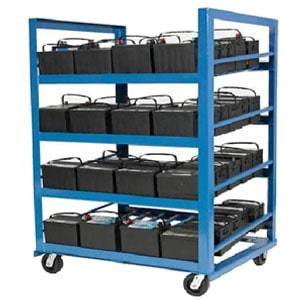
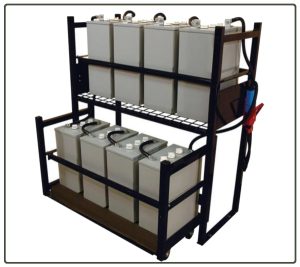
An FRP battery rack is a specially designed structure made from fiber-reinforced plastic, used to hold and organize batteries in industrial, commercial, and renewable energy applications.

These racks are engineered to withstand harsh environments where metal racks typically fail.

How FRP Battery Racks Are Manufactured

Raw Materials Used

FRP battery racks are typically made using:

  • Glass fiber

  • Polyester or epoxy resin

  • UV stabilizers

  • Fire-retardant additives

Each material plays a role in improving strength, durability, and safety.

Pultrusion Process Explained

Most FRP racks are manufactured using a pultrusion process, where fibers are pulled through resin and heated molds. This ensures:

  • Uniform strength

  • Consistent quality

  • Precise dimensions

It’s like baking a perfectly shaped cake—every time.

Key Features of FRP Battery Racks

Corrosion Resistance

This is the biggest win. FRP racks do not rust, corrode, or degrade—even in acidic battery environments. Perfect for places where metal racks simply don’t survive.

High Strength-to-Weight Ratio

FRP racks are lightweight yet incredibly strong. You get excellent load capacity without the headache of heavy structures.

Electrical Insulation Properties

Since FRP is non-conductive, it reduces the risk of electrical shocks and short circuits. Safety first, always.

Fire Retardant Characteristics

Many FRP battery racks are manufactured with fire-retardant resins, adding another layer of protection in critical installations.

Benefits of Using FRP Battery Racks

Long Service Life

FRP racks can easily last 20–25 years with minimal wear. That’s long-term peace of mind.

Low Maintenance Requirements

No painting. No anti-rust coatings. No constant inspections. Once installed, FRP racks just work.

Safety Advantages

Non-sparking, non-conductive, and corrosion-resistant—FRP racks significantly reduce operational risks.

Cost-Effectiveness Over Time

While the initial cost may be slightly higher than metal racks, the lifecycle cost is much lower. Less maintenance. Fewer replacements. Better value.

battery rack

Common Applications of FRP Battery Racks

Telecom Industries

Telecom sites demand reliability. FRP battery racks handle heat, humidity, and chemical exposure with ease.

Power Plants & Substations

High load capacity and electrical insulation make FRP ideal for substations and power utilities.

UPS & Inverter Systems

Hospitals, offices, and data centers rely on uninterrupted power. FRP racks ensure batteries stay safe and organized.

Solar & Renewable Energy Systems

Outdoor solar installations face harsh weather. FRP racks are UV-resistant and weatherproof—perfect match.

Data Centers

Compact design, safety compliance, and durability make FRP racks a smart choice for modern data centers.

FRP Battery Rack Specifications

Load Bearing Capacity

FRP racks are designed to carry heavy loads, often ranging from 500 kg to over 2000 kg, depending on design.

Dimensions & Customization

Available in standard sizes or fully customized based on:

  • Battery type

  • Room layout

  • Load requirement

Tier & Layout Options

Common configurations include:

  • Single-tier

  • Two-tier

  • Three-tier

  • Multi-bank layouts

Compliance with Industry Standards

Quality FRP battery racks comply with:

  • IEC standards

  • Telecom standards

  • Power utility guidelines

  • FRP Battery Racks

FRP Battery Rack vs Metal Battery Rack

Comparison Overview

  • Corrosion: FRP wins

  • Weight: FRP is lighter

  • Maintenance: FRP requires less

  • Electrical Safety: FRP is superior

Performance in Harsh Environments

Where metal rusts, FRP resists. Simple as that.

Safety & Durability Comparison

FRP racks offer better insulation, longer life, and consistent performance over time.

Installation & Maintenance Guidelines

Installation Best Practices

  • Place on level flooring

  • Ensure load distribution is even

  • Follow manufacturer guidelines

Maintenance Tips

    • Periodic visual inspection

    • Clean with dry cloth if needed

    • No chemical treatments required

How to Choose the Right FRP Battery Rack

Based on Battery Type

Different batteries have different weight and size. Always match rack capacity accordingly.

Based on Environment

For humid, acidic, or outdoor environments—FRP is the best choice.

Based on Industry Requirement

Telecom, solar, power plants—all have unique compliance needs. Choose accordingly.

Future of FRP Battery Racks

With the growth of renewable energy, telecom expansion, and data centers, FRP battery racks are only going to see more demand. They’re not just a trend—they’re the future.

Conclusion

An FRP battery rack is more than just a support system—it’s a long-term investment in safety, durability, and efficiency. From corrosion resistance to low maintenance, FRP racks outperform traditional options in nearly every way. Whether you’re setting up a telecom site, solar project, or power backup system, choosing the right FRP battery rack can make all the difference.