
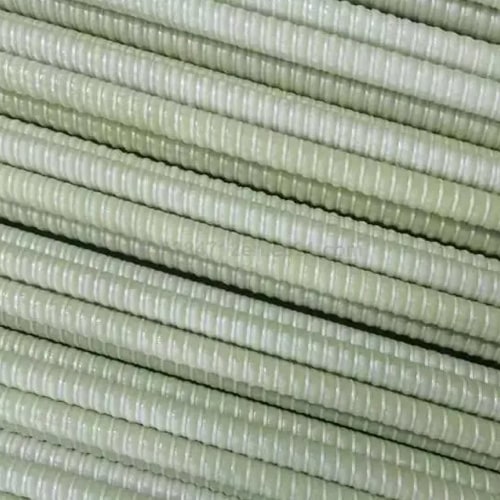
What Is FRP Rebar and Why Is It Better Than Steel?
What is FRP rebar, and why is it better than steel? This question is becoming more common as the construction industry shifts toward durable, sustainable, and cost-effective materials. FRP also known as Fiber Reinforced Polymer rebar, is rapidly gaining popularity as a modern alternative to traditional steel reinforcement.
Traditionally, steel rebar has been the backbone of reinforced concrete structures. However, steel has one major weakness—it corrodes. Over time, corrosion reduces structural integrity, increases maintenance costs, and shortens the lifespan of buildings and infrastructure. This is where FRP steps in as a game-changer.
FRP doesn’t rust, doesn’t corrode, and offers impressive strength-to-weight performance. In this guide, we’ll break down what FRP is, how it works, and why it’s often a better choice than steel—especially for aggressive environments.
Understanding the Basics of FRP Rebar
What Does FRP Stand For?
FRP stands for Fiber Reinforced Polymer. It’s a composite material made by embedding strong fibers into a polymer resin matrix. These fibers provide strength, while the resin binds everything together and protects the fibers from environmental damage.
When used as rebar, FRP replaces steel bars in concrete structures, offering reinforcement without the drawbacks of corrosion and heavy weight.
Key Materials Used in FRP Rebar
FRP rebar typically uses:
Glass fibers (GFRP) – most common and cost-effective
Carbon fibers (CFRP) – extremely strong but expensive
Basalt fibers (BFRP) – good balance between strength and cost
The resin matrix is usually polyester, vinyl ester, or epoxy, chosen based on performance requirements.
How FRP Rebar Is Manufactured
Pultrusion Process Explained
FRP is produced using a process called pultrusion. In simple terms, fibers are pulled through a resin bath and then shaped and cured in a heated die. This creates a consistent, high-strength rebar profile.
Surface treatments, such as sand coating or helical wraps, are added to improve bonding with concrete.
Quality Standards and Certifications
FRP is manufactured according to international standards like:
ACI 440
ASTM D7957
CSA S807
These standards ensure consistent quality, strength, and safety in construction applications.
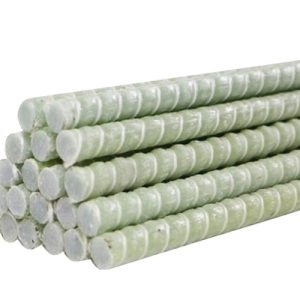
What Is Steel Rebar? A Quick Overview
Steel rebar is made from carbon steel and has been used for decades in reinforced concrete. It offers good tensile strength and compatibility with concrete but suffers from corrosion when exposed to moisture, salts, or chemicals.
FRP Rebar vs Steel Rebar: Core Differences
Strength Comparison
FRP has 2–3 times higher tensile strength than steel. While steel yields before failure, FRP remains elastic until it reaches its ultimate strength.
Weight Comparison
FRP is about 75% lighter than steel, making transportation and handling much easier.
Corrosion Resistance
Unlike steel, FRP is 100% corrosion-resistant, even in harsh environments.
| Property | FRP Rebar | Steel Rebar |
|---|---|---|
| Corrosion | No | Yes |
| Weight | Very Light | Heavy |
| Tensile Strength | High | Moderate |
| Maintenance | Low | High |
| Conductivity | Non-conductive | Conductive |
11 Powerful Benefits of FRP Rebar
1. Corrosion-Free Performance
FRP rebar doesn’t rust. This alone makes it ideal for coastal, marine, and chemical environments.
2. High Tensile Strength
It can handle heavy loads without permanent deformation.
3. Lightweight Advantage
Workers can lift and install FRP rebar easily—no heavy machinery needed.
4. Longer Service Life
Structures reinforced with FRP rebar can last up to 100 years or more.
5. Low Maintenance Costs
No corrosion means fewer repairs and lower lifecycle expenses.
6. Non-Conductive and Non-Magnetic
Ideal for hospitals, power plants, and MRI rooms.
7. Thermal Compatibility
FRP rebar has low thermal conductivity, reducing thermal bridging.
8. Easy Transportation and Handling
Lower freight costs and faster installation save time and money.
9. Chemical Resistance
Resistant to acids, salts, and alkaline environments.
10. Environmentally Friendly Choice
Longer lifespan means less material consumption over time.
11. Better Lifecycle Cost
While initial costs may be higher, long-term savings are significant.
Applications of FRP Rebar in Construction
Marine and Coastal Structures
Used in seawalls, jetties, and ports due to excellent corrosion resistance.
Bridges and Flyovers
Ideal for decks and barriers exposed to de-icing salts.
Industrial and Chemical Plants
Resists aggressive chemicals that degrade steel.
Water Treatment Facilities
Perfect for tanks, pipes, and slabs exposed to moisture.
Residential and Commercial Buildings
Increasingly used in slabs, foundations, and parking structures.
Limitations of FRP Rebar
Although FRP offers many advantages, it has some limitations:
-
Higher initial cost than steel
-
Lower modulus of elasticity
-
Requires specialized design considerations
However, modern engineering practices easily address these challenges.
Cost Analysis: FRP Rebar vs Steel
FRP may cost more upfront, but when you factor in:
-
Zero corrosion
-
Minimal maintenance
-
Extended lifespan
Why FRP Rebar Is the Future of Construction
As infrastructure demands grow and sustainability becomes critical, FRP offers a reliable, long-lasting solution. Governments, engineers, and builders worldwide are adopting it for smarter, more resilient construction.
Simply put, FRP rebar aligns perfectly with modern construction goals—durability, efficiency, and sustainability.
Conclusion
So, what is FRP and why is it better than steel? The answer lies in its durability, corrosion resistance, and long-term value. While steel has served construction well for decades, FRP represents the next evolution in reinforcement technology.
Frequently Asked Questions (FAQs)
1. What is FRP rebar used for?
FRP is used to reinforce concrete in corrosive and demanding environments.
2. Is FRP rebar stronger than steel?
Yes, FRP rebar has higher tensile strength than steel.
3. Does FRP rebar rust?
No, FRP is completely corrosion-resistant.
4. Can FRP rebar replace steel completely?
In many applications, yes—especially where corrosion is a concern.
5. Is FRP rebar safe for construction?
Absolutely. It meets international safety and quality standards.
6. Is FRP rebar cost-effective?
Over the structure’s life, FRP is often more cost-effective than steel.