

FRP Staircases: The Smart Choice for Industrial and Commercial Spaces
FRP staircases are rapidly becoming the go-to solution for modern industrial and commercial infrastructure. In today’s fast-paced construction environment, businesses demand materials that are strong, durable, safe, and cost-effective. That’s where FRP staircases truly shine.
FRP staircases offer superior performance compared to traditional materials like steel, wood, or concrete. They’re corrosion-resistant, lightweight, and designed to withstand harsh conditions. Because of this, industries such as chemical plants, power stations, wastewater treatment facilities, and commercial complexes are increasingly switching to FRP staircase.
In the first phase of construction planning, choosing FRP ensures long-term value. They reduce maintenance headaches, improve workplace safety, and align with sustainability goals. Simply put, FRP are not just an option anymore—they’re a smart investment.
What Are FRP Staircases?
FRP staircases are structural stair systems manufactured using Fiber Reinforced Plastic (FRP) composites. These composites combine high-strength fibers with polymer resins, resulting in a material that’s both resilient and versatile.
Understanding FRP Material
FRP is created by reinforcing plastic resin with glass fibers. This combination enhances mechanical strength while maintaining flexibility. Unlike metals, FRP doesn’t rust. Unlike wood, it doesn’t rot. As a result, FRP perform consistently even in aggressive environments.
Key Properties of FRP
-
High strength-to-weight ratio
-
Excellent chemical resistance
-
Non-conductive and fire-retardant options available
-
UV and weather resistant
-
Long service life
These properties make FRP ideal for high-demand industrial and commercial spaces.
[caption id="attachment_1245" align="alignnone" width="300"]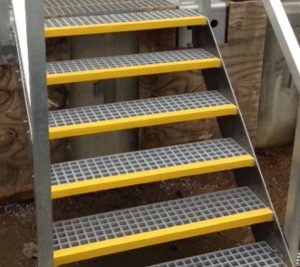 FRP Staircases[/caption]
Why FRP Staircases Are Gaining Popularity
The rising demand for safer, long-lasting, and cost-efficient infrastructure has driven the popularity.
Industrial Demand
Industries deal with extreme environments—chemicals, moisture, heavy foot traffic, and temperature fluctuations. FRP staircases excel under these conditions. They don’t corrode, crack, or degrade quickly, ensuring uninterrupted operations.
Commercial Applications
From malls to office complexes, FRP offer aesthetic appeal along with performance. Designers appreciate the freedom FRP provides, while facility managers love the low maintenance.
Advantages of FRP Staircases
Corrosion Resistance
One of the biggest benefits of FRP is their resistance to corrosion. Steel staircases often require expensive coatings and frequent inspections. staircases, on the other hand, remain unaffected by moisture, chemicals, and salt air.
Lightweight Yet Strong
Despite being lightweight, FRP are incredibly strong. This reduces load on structures and simplifies transportation and installation. It’s a win-win.
Safety and Slip Resistance
Safety is non-negotiable. FRP come with anti-slip surfaces, reducing the risk of workplace accidents. This makes them ideal for industrial safety compliance.
[caption id="attachment_1051" align="alignnone" width="240"]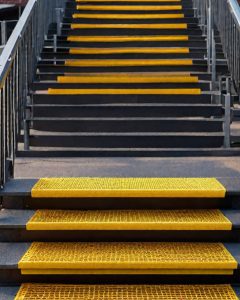 FRP Staircases[/caption]
FRP Staircases vs Traditional Staircases
FRP vs Steel
| Factor | FRP Staircases | Steel Staircases |
|---|---|---|
| Corrosion Resistance | Excellent | Poor |
| Maintenance | Low | High |
| Weight | Lightweight | Heavy |
| Lifespan | Long | Moderate |
FRP vs Concrete
Concrete staircases are bulky and prone to cracks. FRP are flexible, crack-resistant, and much easier to install.
Applications of FRP Staircases
Industrial Facilities
-
Chemical plants
-
Oil & gas refineries
-
Power generation units
-
Wastewater treatment plants
Commercial Buildings
-
Shopping malls
-
Corporate offices
-
Parking structures
Infrastructure Projects
-
Bridges
-
Railway platforms
-
Marine environments
Design Flexibility and Customization
Modular Designs
FRP staircases can be prefabricated in modules, speeding up installation time. This modular approach minimizes downtime.
Aesthetic Options
Available in various colors, textures, and finishes, FRP blend function with style.
Installation and Maintenance
Easy Installation Process
Because FRP are lightweight, they’re easy to handle and install. Fewer labor hours mean lower costs.
Low Maintenance Benefits
No painting, no rust treatment, no structural repairs. FRP save money over time.
Environmental and Sustainability Benefits
FRP support sustainable construction. Their long lifespan reduces material waste. Additionally, many FRP products are recyclable.
Cost Efficiency Over Lifecycle
While initial costs may be slightly higher, FRP deliver substantial savings in maintenance, repairs, and replacement. Over 20–30 years, they outperform traditional materials financially.
Compliance with Safety Standards
FRP meet international safety standards for load, fire resistance, and slip prevention. They’re trusted across regulated industries.
Conclusion
FRP are redefining modern construction in industrial and commercial spaces. They combine strength, safety, durability, and sustainability—all while reducing long-term costs. If you’re planning a future-proof project, staircases are undoubtedly the smart choice.
Frequently Asked Questions (FAQs)
1. Are FRP staircases suitable for outdoor use?
Yes, staircases are weather-resistant and ideal for outdoor environments.
2. How long do FRP staircases last?
With minimal maintenance, staircases can last over 30 years.
3. Are FRP staircases fire-resistant?
Fire-retardant resins can be used to enhance fire resistance.
4. Do FRP staircases require painting?
No, staircases retain color and finish without painting.
5. Are FRP staircases cost-effective?
Absolutely. Their low maintenance and long life reduce overall costs.
6. Can FRP staircases be customized?
Yes, they can be tailored to specific design and load requirements.